THE YEAR 2025 was the “Dirty Fidesz” summer for Hungary. This was the chant that could be heard at events across the country, from small concerts to the international Sziget Festival. When the anti-government slogan first emerged in 2023, it was primarily heard at concerts by musicians openly criticising the government of Prime Minister Viktor Orbán.
By 2025, it had reached the mainstream media.
In January, Hungary’s most popular rapper and former reality TV star Majka released his music video Csurran, cseppen (Drip by Drip). The song tells the story of a corrupt dictator from an imaginary country called Bindzsisztán (literally translated as Kleptistan), who having been given a truth potion confesses in an interview about how he took over the country.
“I can survive anything; the laws are written on me,” sings the autocratic leader, as heaps of banknotes fly through the air.
The video went viral within a day, reaching 28 million views by October in a country of 9.5 million. Without any direct references, viewers quickly drew parallels between the fictional state and Orbán’s Hungary.
Other Hungarian musicians used even stronger language. The 23-year-old Hungarian superstar Azhariah, who sold out the 60,000-seat Puskás Stadium for three consecutive nights, angered government supporters when in an Instagram post, he called Fidesz voters “mentally and intellectually retarded creatures”, for which he later apologised.
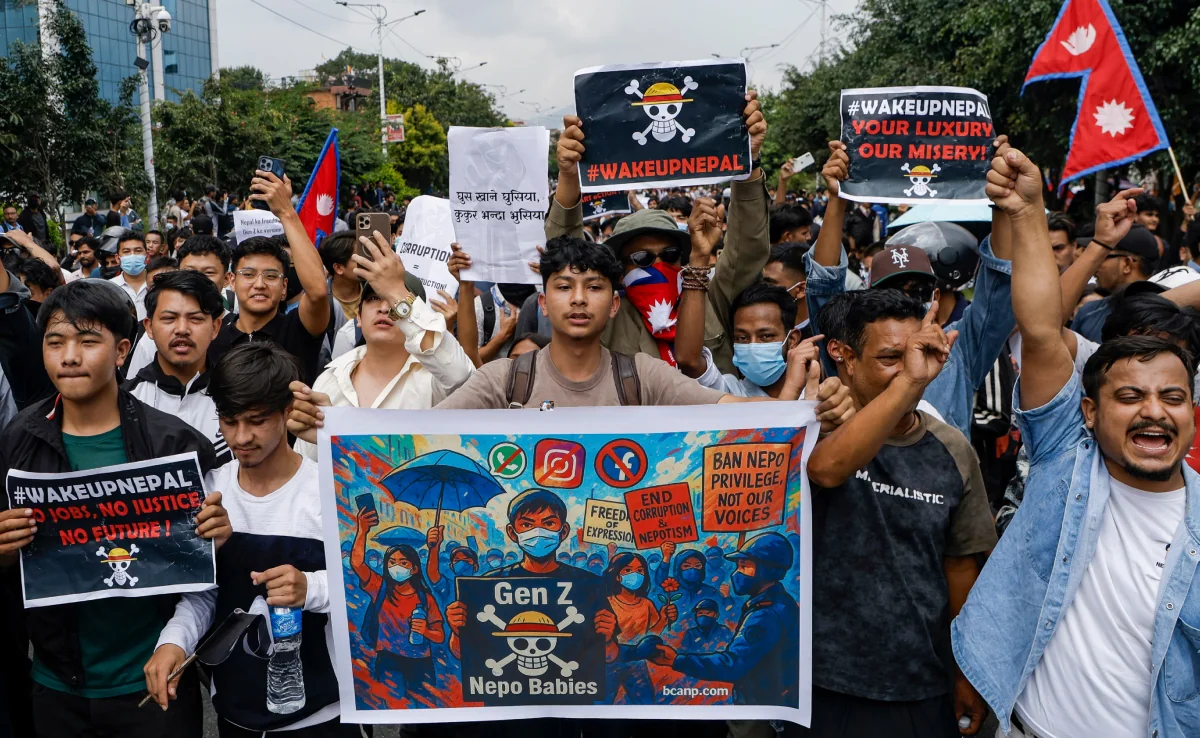
However, it is not only musicians who are expressing deep anti-government sentiments in Hungary. Tension and frustration are particularly high among the young generation, who feel that they have not been able to express their views through elections for a very long time.
“We don’t like what we see,” explained Eszter, a 19-year-old university student from Budapest. She believes that the country’s problems are complex, but that Gen Z is particularly affected by the high cost of living, inflation, and social issues.
“The healthcare system is in ruins, the education system does more harm than good, wages are ridiculous, and it’s almost impossible to buy a flat unless you were born into wealth,” she told Index.
Eszter also believes that young people in Hungary lack a vision for the future. Her words are supported by demographic data. According to 2024 figures, 546,000 Hungarians are officially registered as living in other EU countries, or the United Kingdom, Switzerland and Norway. If we add the USA, Canada, South America and Israel, the estimates are around 700,000. This is around 7% of the population.
The figures are even more alarming when we consider the so-called active population, defined as people between the ages of 15-64. In 2023, there were already a total of 420,000 people in this age group living abroad, which is having an impact on the Hungarian economy.
According to researcher Ágnes Hárs, the exodus is primarily driven by the cost of living crisis, low wages and high inflation. Younger generations are also leaving for western Europe to study, as an increasing proportion of students in Hungary now have to pay for their higher education. The situation is made worse by the fact that 21 Hungarian universities have been banned from participating in EU-funded Erasmus exchange programmes because they were taken over by public trusts filled with people from Viktor Orbán’s Fidesz party.
According to a recent survey by Fay Andras Foundation, only six out of 100 Gen Z Hungarians are certain to stay in the country. A staggering 57% of young people envisage living abroad within ten years. Of those who leave, the majority are unlikely to return.
For an increasing number of people, the economy is only one of the problems. Since Viktor Orbán came to power in 2010, he has steadily undermined the rule of law and democratic norms. Corruption has become rampant, prompting the EU to suspend a significant portion of the funds allocated to the country. The government has also started a culture war to dismantle the independence of academic institutions, including universities. When teachers at several secondary schools began acts of civil disobedience in response to restrictions on strikes, the authorities fired more than a dozen of those who participated.
Fidesz has also become increasingly vocal in its opposition to the LGBTQ+ community, and the introduction of a new law banning Pride parades has sparked a backlash at universities. Pázmán Péter Catholic University initiated disciplinary proceedings against three psychology lecturers who, after the ban was announced, published a newspaper article supporting the view that a loving family is more important to children than the gender of their parents, using scientific evidence. Ultimately, all three resigned.
But Gen Z are fighting back. In June, over 200,000 people defied the Pride ban and marched in Budapest to celebrate freedom. Among them was 20-year-old Zsolt, who was attending a public demonstration for the first time.
“I don’t want to care about politics, but I have no choice. It has become part of my life, whether I like it or not. Fidesz’s politics and ideology are everywhere, including my school and among my friends. Half of my classmates went on to study at foreign universities, and although I stayed, I increasingly feel suffocated by the atmosphere around me,” he said.
With fewer and fewer spaces available for young people to express their political opinions, music festivals and the ballot box are all that remain.
Opinion polls currently show that the new opposition party Tisza, headed by Péter Magyar, has a steady lead ahead of general elections in Hungary in 2026. Magyar, who is the ex-husband of Orbán’s former Justice Minister, Judit Varga, was once a beneficiary of the system. Now he is hoping to topple the regime.
Unlike Orbán, a 62-year-old grandfather who reportedly still uses an 18-year-old Nokia phone, Magyar is dynamic, sporty and stylish, and is particularly popular with younger people. Opinion polls show that Fidesz has fewer and fewer voters the younger the age group, being especially unpopular among 18–29-year-olds.
According to a Medián survey published in June this year, Gen Z have almost no personal memories of any other prime minister besides Viktor Orbán, yet 58% still support the Tisza Party.
Fidesz is well aware of this and has been searching for a way to win back young people. Initially, they tried to engage with young people on social media, particularly TikTok. They are now also offering economic incentives: such as exempting people under 25 from paying personal income tax and introducing extremely favourable loans to help them buy their first home.
Some high-profile government politicians have also dismissed criticism by saying that it is only natural for younger generations to rebel against the system. Meanwhile, Deputy Prime Minister Zsolt Semjén argued that young people in Hungary have never received more support than they do under the current government.
What they probably don’t realise is that Gen Z is not just after money. They also want a better quality of life and freedom.
“These loans aren’t free. We’re just getting into debt while our education and healthcare systems are failing. The government can’t find common ground with young people – they’re on a different wavelength – but that’s fine by us. Let’s keep it that way,” said Zsolt
This article first appeared in Index on Censorship's winter 2025 magazine issue, Gen Z is revolting. Find out more.