A news report was released stating that all the water fountains in Tehran had turned red, making the city look like it was covered in blood. When "H.M." saw the news, he was happy. He hadn’t expected a few gallons of red paint to make such an impact in the news, as big as an atomic bomb. The news about Tehran had reached all the way to Oslo. He called his friend, who was a political refugee in Norway, and they planned to organize a protest in Oslo. He couldn’t do it alone as he had never done anything like this before. He was just an art student who had moved to Norway for his studies. Although he wasn’t political, he disliked the government as much as any free and moral person would. Now that the news of the explosion had reached Oslo, he wanted the protest to spread there too. He wanted the whole world to know that his people, his parents, his friends, and even his memories were being held hostage by murderers. He wanted to scream for them.
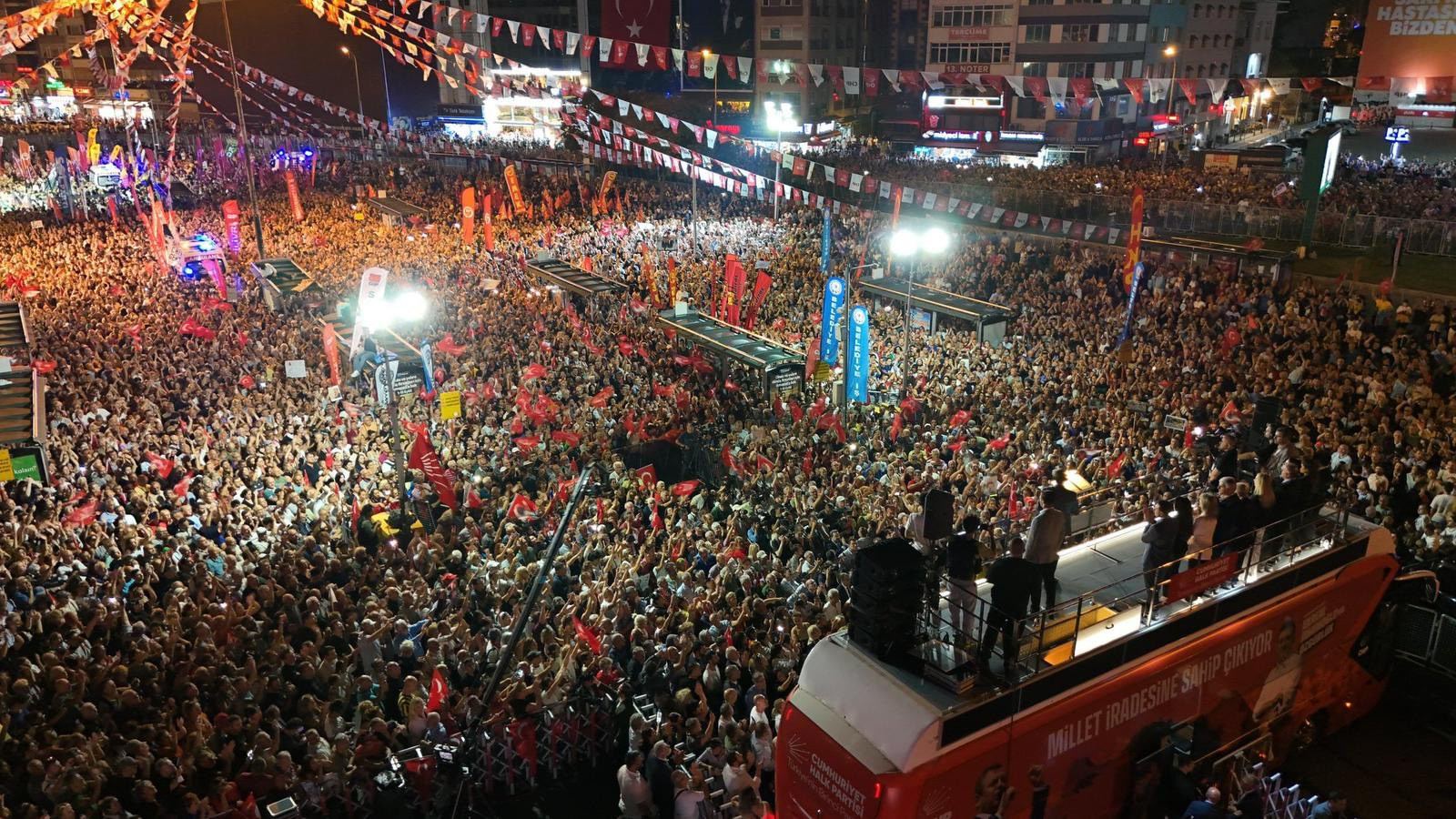
He was anxious until the day of the protest, but he knew it was something he had to do. He thought he might only gather twenty people, but even if one more person joined, it would make their voices louder. On the day of the protest, he was surprised to see more than a thousand people, including non-Iranians. He realized that the desire for freedom has no borders or color. Even in one of the coldest countries in the world, people with warm hearts care about others. He felt proud.
"H.M." was a painter living in Canada who, after years of effort, had finally gotten permission from the city to hold an art exhibition. He hoped that with the support of the Iranian community in Canada and the sale of his works, he could stop working as a supermarket cashier and live the life he wanted. Everything was going according to plan until a week before the exhibition, when the news from Tehran reached Canada. He saw many photos and videos that had managed to get past the censorship and filtering. He looked at the blood on the black asphalt and at the human paintings—lifeless bodies.
His emotions were all mixed up—anger, sadness, pride, fear, hate, and love. He was angry at the way the dictator’s dogs treated the people, sad for those being brutally oppressed, proud of his fellow Iranians, scared that more people might die, and in love with his country, feeling the flames of that love more strongly than ever. He couldn’t even think about going to work, let alone holding an exhibition and pretending to be a happy artist. He had no desire to be at the exhibition and smile at people when his friends and countrymen in Iran weren’t smiling. He had to choose between canceling the exhibition or ignoring his conscience. He needed to think.
After a sleepless night, he made his decision. He would hold the exhibition, but it would be different. He spent the entire week painting. He poured all his hatred for the government, his love for his homeland and people, and everything he saw in the news into his paintings. He made the exhibition free and spent all his savings on advertising it. He wanted to show the people of Canada what horrors were happening in the land of oil wells across the seas. Although this meant he would still have to do a job he didn’t like, he was happy. He had always felt that he had a role to play in the fight for freedom, a duty to fulfill. On the day of the exhibition, as he dressed, his eyes shone, and he said to himself, "Now you’re useful, now you’re human. The oxygen of the Earth is in your lungs. Thank you for not becoming a pig."
"H.M." had just received his artist visa and had been in France for a year. His main joy these days was playing music by the Eiffel Tower. Whenever he missed Iran, he would get some pomegranate wine, take his instrument, and play for a few hours under the Eiffel Tower. His goal was to work with some French artists and build a resume. He wanted to stay for a few years and then return to his country with a strong portfolio, hoping that the art mafia would treat him better and that he wouldn’t have to collaborate with the government to grow. He believed that the government, which knew nothing about art, only used it to cover up its killings, adding a bit of red paint to the bloodshed to delay its fall. He thought that any artist who worked with the dictator was complicit in the killings and torture. He felt he had no choice but to either become an accomplice to the murderers or become a big fish and return. He chose the latter and moved to France.
But when someone migrates, even for a short time, even if they pack everything, they realize once they’re on the plane that they’ve left their heart behind. Some people might find someone who will mail their heart back to them after a while, but most people live the rest of their lives on batteries. Anyway, he was playing his instrument, eyes closed, when he felt a warm hand on his shoulder. It was his friend, who said, "I’m busy, but I came to tell you that we’re holding a protest this weekend to support the people in Iran. We need one more musician in the band. If you want to join, be here in five days. We need to go over a few things before the performance. Just keep in mind that Iranian security forces might be at the protest. Take that into account when you decide. But this is the last time. We’re hopeful this is the final push, but still, consider the possibility that it might not be."
His friend left, and "H.M." was so lost in thought that he didn’t even realize how he got home, changed clothes, and ended up in bed. It was a hard decision. If he went to the protest, he would have to give up on returning to Iran, and his life would take a direction he had never considered. Would he have to seek asylum? Would he even be granted asylum? He was lost in these thoughts, and his vision started to blur when a notification on his phone snapped him out of it. His friend had sent him news about another crime committed by the government, this time involving a child, with a note saying, "Add this to your decision-making process."
His ears turned red with anger, and his eyes filled with tears. He replied to his friend, "I’ll come, definitely. Count on me." Sometimes, you have to step out of your individual self and join the collective, sacrificing for the greater good. A clear conscience is worth more than a big bank account. It’s better to die as a human being than to die as a famous person.
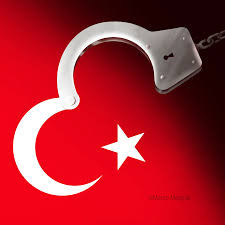
"H.M." was a political refugee living in Turkey. He was a writer who had managed to escape the country with a bail, fleeing from a sentence. It wasn’t really an escape, more like a systematic exile. They make you choose between leaving everything behind or losing your life. In Iran, the court’s verdict is usually decided before the trial. You can tell what the government plans for you by the way the officers treat you when you’re arrested. It’s normal for a dictatorship to confiscate your belongings, but what varies is the type of torture, the length of solitary confinement, and the tone of the interrogator’s voice. They decide whether to eliminate you or just scare you and release you back into society with bad memories and nervous tics. In this society, just being arrested can exclude you from many services and opportunities, like going to university or even getting a simple office job—things that might be taken for granted in other countries but are the dreams of many in Iran. In Iran, the interrogator, not the judge, often decides your crime. The jury is just a joke in the judiciary of dictatorships.
"H.M." had thought about all of this and decided to leave his country, even with all his longing for it, and move to a foreign land as a refugee—the worst way to immigrate. But what could he do? He had to put up his belongings as bail to escape. Not that his belongings were much—how much can a writer earn in a country where people spend more time spitting than reading? But still, being a refugee is better than life imprisonment. At least the food is better, unless, of course, the sentence had been life imprisonment and not execution. The difference between exile and death is the ability to bear fruit, which is why he wanted to speak out and tell the truth, even if only one person listened. A single light is better than complete darkness.
He had been in Turkey for six years, but his asylum had not yet been approved, so he was still a refugee. As a result, he was more cautious and less active. He was also disappointed in the people who remained silent in the face of all the oppression, until a government killing of a young girl sparked a movement in Iran, and young people took to the streets. His heart was filled with joy, and his blood boiled like water in a kettle on the stove. He wanted to do something but didn’t know what. He especially wanted to act when he saw the kids in Europe and the U.S. joining the movement alongside the Iranians inside the country. He tried to get a permit for a protest but was denied. He thought and thought, trying to find a way, but nothing worked. He decided to write slogans and get them to the people inside Iran, but that wasn’t possible because slogans come from the heart of the people, from the streets. But he hadn’t set foot in Iran in years, even though Iran was in his veins. He decided to fight the dictator’s ideology and its supporters on social media. He thought that if he could awaken even one brainwashed person, there would be one less person who is killing innocent people.
Even if just one of the indifferent people who are not with the kids for whatever reason could be awakened, the kids would win sooner. He was not wrong. Today, the internet is very important; the virtual front is as crucial as the physical one. He sent supplies from behind the wall of censorship and filtering to the other side. Even though each bullet that was fired made his eyes wet, he did not give the enemy any joy. He stayed awake and fought, criticizing all the militia with words and letting out curses and threats from his body each morning.
A photographer named H. Mim lived a simple life, taking pictures of people's smiles and earning just enough to get by. He could have worked for the government and lived comfortably, but he chose to stay independent. He thought that as long as he wasn’t working with the government, he was doing enough. He tried to avoid politics and told his friends to just live as ordinary citizens.
One day, he met a girl visiting Tehran and offered to take her picture. She agreed, and after taking the photo, he went on with his day. Later, while eating a falafel, he checked Twitter and saw news about a girl named Mahsa Amini, who had been arrested for not wearing her hijab properly. Looking at the photo, he realized she was the same girl he had met earlier. The news shocked him, and he felt deep regret and guilt. He couldn't stop thinking about her, and he remembered what a friend once told him: that the government was responsible for all the bad things happening, and people should fight back.
H. Mim was overwhelmed with anger and wanted to do something. He decided to join a protest and take pictures to share with independent media. This way, he could help the cause and still stay somewhat safe. He started doing this, feeling braver each time he picked up his camera.
Meanwhile, a young woman who had once dreamed of being an artist was stuck at home, caring for her mother who had a stroke. The government had caused her so much pain—she had been expelled from university and couldn’t pursue her dreams. She felt trapped but wanted to do something to fight back. She decided to create art that would send a powerful message.
One night, she bought three gallons of red paint and secretly went out to pour the paint into fountains around Tehran, making them look like they were filled with blood. The next day, an opposition news outlet reported that an unknown artist had turned the fountains of Tehran red, striking a blow against the government.
No one knew who did it, but the young woman felt a sense of freedom and continued creating art.
“H.M (Honarmande Mardomi):in Farsi
"artist of the people" in English
The End
Benyamin Abbasi Ghozhdi