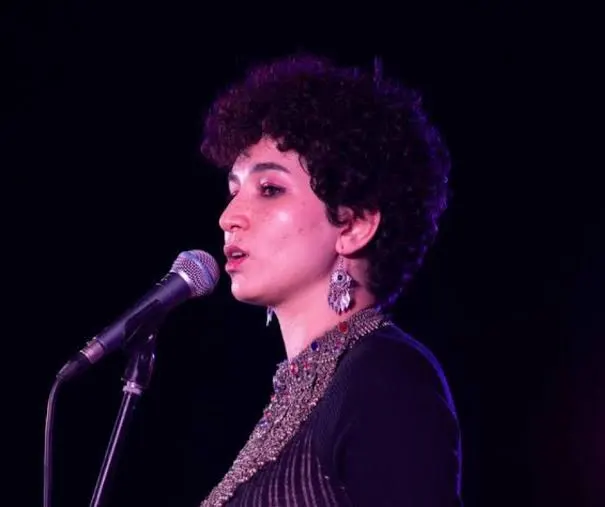
➣Originally published on Suddhasar Magazine, republished as part of our Asia spotlight with the author's approval.
➣Listen to Ghawgha's Music
In the first years of exile, the shock of separation and the collapse of all my imagined futures silenced me. My voice, like my memory, was broken. I keep trying to stitch together the scattered fragments of myself — an endless struggle with what remains of my past, and of me.
I remember the day I stepped off the plane: the sky was blue — a blue I had never seen before. I called it the distant blue. From that moment, I knew a new color had nested in my throat — one that would call me back to singing again.
Every laughter once carried meaning I understood. But here, I am separated from meaning by distances made of silence.At first, I felt like a speechless child separated from its mother, yet asked to smile — only because it is being fed. In this new language, my voice is an insufficient and fractured translation, as though I am learning to stutter all over again.
This listener might be a young person in the heart of Afghanistan, or an old soul on a remote edge, in a refugee camp or an unfamiliar city. I sing my life — knowing that thousands of others have lived, and are still living, the same one.
I often find myself in a kind of limbo, suspended between places and states of being. My soul drifts among distant sounds and forgotten scents. At times, the smell of a walnut tree reaches me from nowhere. I find myself walking familiar streets, only to realize that the distance between then and now will never close; nothing ever truly happens in the present.
Music, for me, is a way back to the feeling of being alive — a way to understand where I came from, and where I have not yet fully arrived.
When I sing, my music is for all human beings: for those whose voices or stories have been pushed to the margins; for those who, in darkness, find their path leading both to a well in the depths and a mountain in the heights.
Here, in the far north of Europe, I am often lost and disoriented — a feeling familiar to anyone who has had to leave home. All the tools that once helped me find myself and understand my relation to the world have vanished: the voice of my mother, the sunset, the touch of pomegranate trees, the smell of tomato vines, the soft light of the sun, the songs of birds whose names I knew — even the laughter of children.
Every laugh once carried meaning I understood. But here, I am separated from meaning by distances made of silence. At first, I felt like a speechless child separated from its mother, yet asked to smile, only because it was being fed. In this new language, my voice is an insufficient and fractured translation, as though I am learning to stutter all over again.
The truth is that music itself is a journey — one that takes you through the unpredictable and uneven paths of life. I have surrendered myself to this journey. Even when I lived at home, I listened to the music of many cultures — from the Roma of the Balkans to the experimental sounds of today. Even then, I dreamed that my voice might speak with those distant worlds.
Now, in Europe, among contemporary artists and sounds, I have found the chance to be part of those conversations.
I want the world to hear the details of what we have lost — and what we continue to fail — though I know that listening is never easy.
What I have lived through has split my vision in two: one half fixed on the dust of the past, the other on the cloud ahead, behind which the sun hides.
And in that in-between, I sometimes see a solitary bird flying toward that very cloud — even when there is no tree left for it to rest upon.
In a world where both leaving and staying are forms of suffering, I only hope that neither will ever be born of despair.
➣Ghawgha’s album “Qaf,” released November 15, 2024, can be found here: orcd.co/dlvyyry.
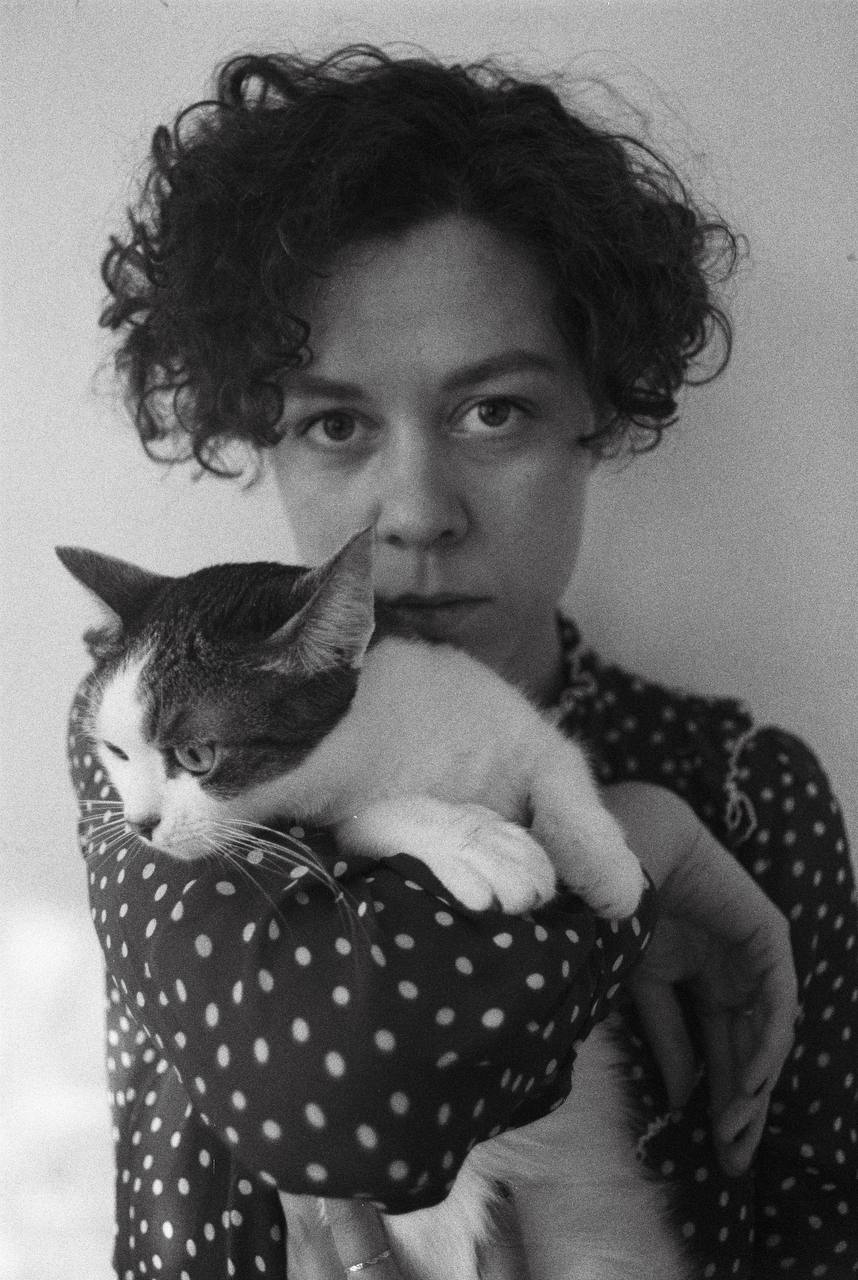
➣Photo credits: Marie von Krogh